
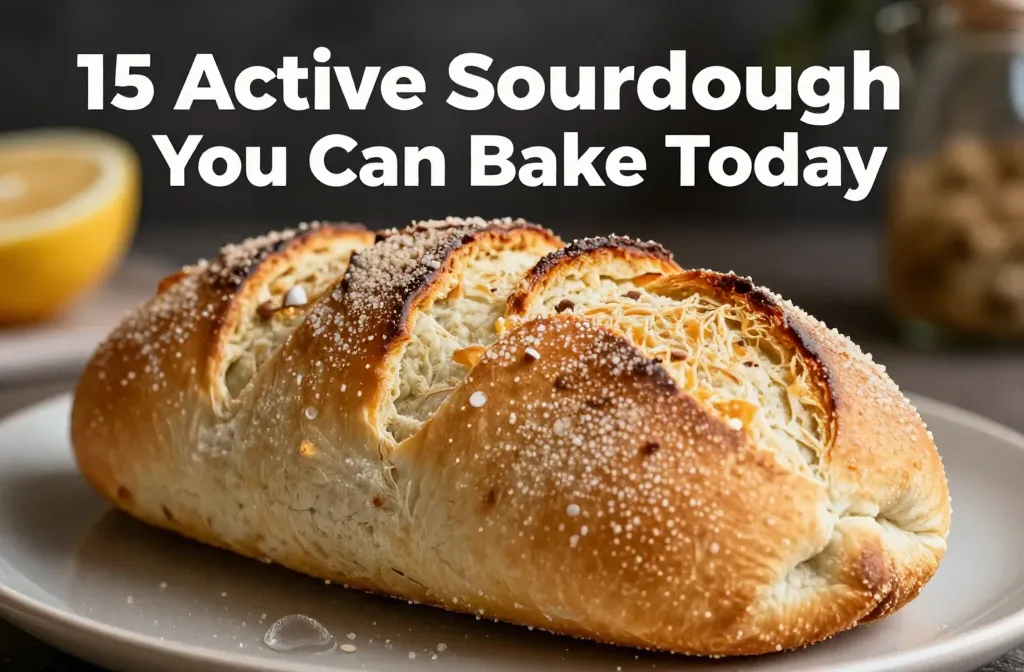
Sourdough starter bubbling on the counter? Perfect. You’ve basically got a tiny, delicious science project begging for attention. Let’s put it to work today with recipes that go beyond the usual boule. I’ll show you 15 active sourdough bakes that hit breakfast, snacks, and dinner—no gatekeeping, just practical tips and flavor. Ready to turn that jar of yeasty joy into carbs? Let’s bake.
Everyday Loaves That Never Fail
You want a loaf that slices like a dream and tastes like you tried but didn’t overthink it? These deliver. They use an active starter, they’re reliable, and they won’t hijack your whole day.
1) Classic Country Sourdough
Why bake it: Crispy crust, open crumb, deep tang. It’s the poster child. You’ll do a simple mix, a few folds, and a long proof.
- Flour: 80% bread flour, 20% whole wheat.
- Hydration: 75% for a nice open structure.
- Timing: Mix in the morning, bake by dinner.
2) Sourdough Sandwich Bread
Why bake it: Softer crumb, thinner crust, perfect for grilled cheese. Bake it in a loaf pan so it slices straight.
- Use milk or a touch of butter for tenderness.
- Proof until the dome rises just above the pan rim.
3) Whole Wheat Hearth Loaf
Why bake it: You want flavor and fiber without a brick. Add a spoon of honey and a short autolyse to keep it moist.
- Go 60–70% whole grains; add 2–3% oil to soften.
- Steam early in the bake for a better rise.
Breakfast Bakes That Make Mornings Better
Nothing beats warm carbs before noon. These recipes use active starter for flavor but still move fast. You’ll look like the chill person who “just whipped something up.”
4) Sourdough Pancakes
Why bake it: Tangy, fluffy, and way more interesting than the boxed mix. Mix your batter, rest it 15 minutes, then cook.
- Use active starter + milk + egg + a bit of sugar.
- Whisk in baking soda at the end for extra lift—watch it foam.
5) Sourdough Waffles
Why bake it: Ultra crisp outsides, custardy centers. Perfect with fried chicken, IMO.
- Include a touch of oil and cornstarch in the batter for crunch.
- Rest the batter 20–30 minutes; the tang develops fast.
6) Sourdough Cinnamon Rolls
Why bake it: Buttery spirals with a whisper of tang. Yes, you can skip the packet yeast.
- Do a morning mix, afternoon shape, and evening bake, or cold-proof overnight.
- Cream cheese icing + a pinch of salt = balance.
Snack Attacks, Solved
Need something to tear, dip, and snack on while the real dinner happens? Sourdough shines here. These deliver fast satisfaction with big flavor.
7) Sourdough Focaccia
Why bake it: Puffy, olive-oily bliss. Great with soup or on its own like the absolute main character it is.
- High hydration (80–85%) and generous olive oil.
- Top with tomatoes, olives, or rosemary and flaky salt.
8) Sourdough Crackers
Why bake it: Use that extra starter and avoid food waste. They crisp up fast and pair with everything.
- Mix starter, flour, oil, salt, and herbs. Roll thin.
- Dock with a fork, sprinkle seeds, and bake until golden.
9) Sourdough Soft Pretzels
Why bake it: Chewy, salty, and oddly therapeutic to twist. Serve with mustard or cheese dip.
- Brief baking soda bath for that pretzel sheen.
- Finish with coarse salt; brush with butter if you’re feeling chaotic good.
Weeknight Heroes
You want comfort food, fast. These recipes use your active starter for flavor and structure, but they don’t demand a 12-hour commitment.
10) Sourdough Pizza
Why bake it: Leopard-spotted crust with real flavor. You’ll never go back to bland dough, FYI.
- Mix dough in the morning, cold-proof until dinner.
- High heat (500°F/260°C or more) and a preheated stone or steel.
- Keep toppings light for better rise.
11) Sourdough Flatbreads
Why bake it: Speedy and versatile. Rip, dunk, repeat.
- Cook in a hot cast-iron skillet; bubbles = success.
- Brush with garlic butter and herbs for instant “naan-ish” vibes.
12) Sourdough Skillet Cornbread
Why bake it: Tang meets sweet corn. Killer with chili or BBQ.
- Use cornmeal, a little flour, active starter, buttermilk, and eggs.
- Preheat the skillet with butter to get that crispy edge.
Show-Off Bakes (But Still Totally Doable)
Got friends coming over or just want to flex? These look fancy but won’t wreck your sanity. Promise.
13) Sourdough Bagels
Why bake it: Dense chew, glossy crust, proud baker moment. They freeze great too.
- Shape tight, cold-proof overnight, then boil in barley syrup water.
- Sesame, everything spice, or cinnamon sugar—choose your fighter.
14) Sourdough Brioche
Why bake it: Rich, tender crumb with that subtle tang for balance. French toast material for days.
- Gradually add butter while mixing for a silky dough.
- Chill to handle more easily; braid or bake as a loaf.
15) Sourdough English Muffins
Why bake it: Nooks and crannies galore, perfect for eggs Benedict or jam. They cook on the stovetop, which feels like magic.
- Roll to 3/4-inch thickness, cut rounds, proof until puffy.
- Griddle low and slow; finish in the oven if needed.
Pro Tips for Working With Active Starter
Let’s keep the science light and the results great. A few smart moves make every recipe better.
Feed Timing and Readiness
- Use starter at peak rise when it looks domed, bubbly, and smells pleasantly fruity.
- If it sinks or smells harsh, feed and wait. Patience saves loaves.
Hydration and Texture
- Wetter dough = more open crumb, but it demands gentle handling and good gluten development.
- For structured loaves, aim 65–75% hydration. For focaccia, go higher.
Fermentation Cues
- Watch the dough, not the clock. It should look puffed, jiggly, and slightly domed before you shape or bake.
- Warm kitchens speed things up; cool rooms slow them down. Adjust rests accordingly.
Flavor Boosters You’ll Actually Taste
Want a loaf that tastes like you spent years perfecting it? Add-ons help, and they’re easy.
- Seed mix: Toast sesame, flax, and sunflower seeds; add during final fold.
- Soaker: Hydrate grains like oats or cracked wheat to avoid dryness.
- Sweet balance: A teaspoon of honey or malt rounds out acidity (IMO, brilliant in whole wheat loaves).
- Fat finesse: Olive oil or butter adds tenderness in pan loaves and focaccia.
Common Mistakes (So You Don’t Make Them)
You’ll still bake great bread if you avoid these classic traps. Consider this your friendly nudge.
- Underproofing: Tight crumb, split sides. Give it more time and warmth.
- Overproofing: Flat loaf, weak oven spring. If in doubt, cold-proof to slow things down.
- Poor scoring: Score deep enough (about 1/4 inch) so steam can escape and the loaf can expand.
- Cold oven/stone: Preheat longer than you think. Heat equals rise.
FAQ
Can I swap active starter for discard in these recipes?
Yes for pancakes, waffles, crackers, and flatbreads; the difference will be mild flavor and slightly less rise. For loaves, bagels, and brioche, stick with active starter because you need strong fermentation. If you only have discard, add a bit of yeast and adjust hydration.
How do I know my dough is ready to bake?
It passes the poke test: press gently and the dough slowly springs back but leaves a slight indent. It also looks puffed and airy, not slack or collapsed. If it feels sleepy, give it a little more warmth and time.
Do I need a Dutch oven for good crust?
Nope, but it helps. You can bake on a preheated stone or steel and create steam with a pan of boiling water or ice cubes. Or cover the loaf with a large metal bowl for the first 20 minutes—DIY steam chamber, done.
What flour works best for sourdough?
Bread flour gives strong structure and a nice open crumb. Add 10–30% whole wheat or rye for flavor and color. For super tender bakes like brioche, use strong white flour and enrich with butter and eggs.
How do I fit sourdough baking into a busy day?
Use the fridge like a pause button. Mix in the morning, bulk for a few hours, shape, then cold-proof until you’re ready to bake. You can also mix dough at night, proof cold, and bake fresh in the morning. Flexible timelines keep it sane, FYI.
My starter rises but smells sharp. Is that bad?
Not necessarily. A new or hungry starter can smell vinegary. Give it a few consistent feeds, keep it warm, and use it at peak. The aroma should mellow into fruity and yeasty notes.
Conclusion
You don’t need a stone hearth or a monk’s patience to bake great sourdough today. Pick one recipe, feed your starter, and go for it. The more you bake, the better your instincts get—like a cheat code for carbs. And if the loaf leans funny? Slice it anyway. Butter fixes everything.