
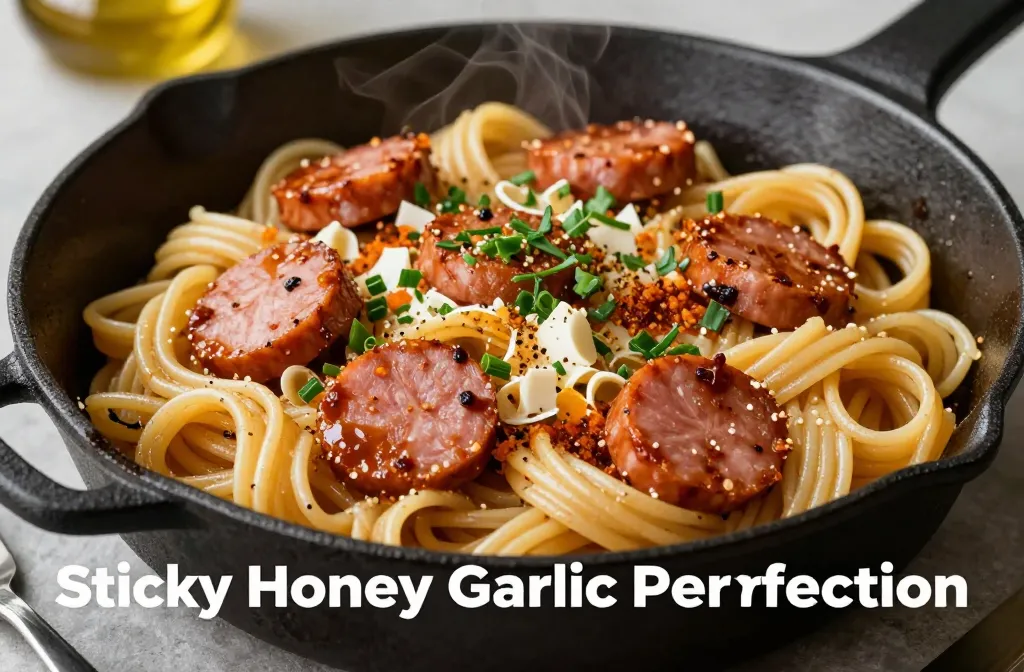
Sticky, sweet, garlicky, and gloriously saucy—this skillet pasta doesn’t ask for your time; it demands it. We’re talking honey garlic glaze clinging to juicy sausage coins, with pasta soaking up every last drop like a champ. It’s a weeknight hero that feels a little extra without trying too hard. Dinner in one skillet? Yes, chef.
Why This Skillet Rules Your Weeknight
You want big flavor with minimal effort. This delivers. The honey-garlic combo does the heavy lifting, and the sausage brings the party. Toss in pasta that cooks right in the sauce, and boom—carbs, protein, and a glossy finish that looks restaurant-level.
Also, this skillet handles substitutions like a pro. Don’t have rigatoni? Use penne. Can’t find smoked sausage? Grab Italian. The sauce doesn’t judge—IMO, it even tastes better when you freestyle a little.
What You’ll Need (and Why)
Let’s keep it simple and bold. Here’s the lineup that makes the magic happen:
- Smoked or Italian sausage: Smoked adds depth and a tiny hit of spice. Italian brings juicy, herby energy. Both work.
- Garlic (lots): Thinly sliced or minced. The sauce needs it. Your kitchen deserves it.
- Honey: Sweet and sticky—this is the glaze glue.
- Soy sauce: Salty umami to balance the sweet. Use low-sodium if you’re sensitive.
- Tomato paste: Body and richness. It thickens the sauce and adds a tangy backbone.
- Crushed red pepper: Optional, but highly recommended for a little heat.
- Chicken broth or water: You’ll cook the pasta right in it, so flavor matters.
- Short pasta: Rigatoni, penne, shells—anything with ridges that hold sauce.
- Butter: For a glossy finish and flavor boost.
- Green onions or parsley: Freshness on top. Color matters too.
- Lemon or rice vinegar: A splash at the end to keep things bright.
Optional but Awesome
- Sesame oil: A few drops at the end add nutty depth.
- Pineapple tidbits or peas: If you want sweet pops or extra veg, go for it.
- Parmesan: Not traditional here, but I won’t tell. It slaps.
The Game Plan: One Skillet, Zero Stress
No complicated steps. No chaos. Just a little sizzle and a stir.
- Crisp the sausage: Slice into coins and brown them in a large skillet over medium-high heat until the edges caramelize. Remove and set aside.
- Build the base: In the same skillet, add a small knob of butter and the garlic. Cook 30–60 seconds until fragrant. Stir in tomato paste and cook another minute to caramelize it slightly.
- Make it sticky: Add honey, soy sauce, a pinch of red pepper, and a splash of broth. Stir to form a glossy sauce.
- Pasta time: Pour in remaining broth and add the dry pasta. Stir well so nothing sticks. Bring to a bubbly simmer.
- Cook and reduce: Cover and simmer, stirring occasionally, until the pasta turns al dente and the liquid thickens—about 10–12 minutes. If it gets too thick before the pasta’s done, add a splash more broth or water.
- Finish strong: Return sausage to the skillet, add a small pat of butter, and a squeeze of lemon or a splash of rice vinegar. Toss until glossy. Taste and adjust—more honey for sweet, more soy for salt, more chili for heat.
- Top it off: Sprinkle green onions, parsley, or sesame seeds. Serve immediately. Then try not to eat it straight from the pan.
Texture Tips
- Sticky vs. saucy: For stickier glaze, simmer uncovered at the end. For saucier pasta, add a splash of broth and toss right before serving.
- Extra glossy: A teaspoon of butter or a drizzle of olive oil at the finish gives you that restaurant sheen. FYI, it also amps the flavor.
Flavor Balancing 101
Why does honey + garlic + soy taste so satisfying? It hits sweet, savory, and umami in one swipe. But balance matters. If the sauce tastes flat, it likely needs acidity. If it tastes sharp, it needs a bit more fat or sweetness.
Quick Fixes
- Too sweet? Add soy sauce or a splash of vinegar.
- Too salty? More honey or a tiny bit of water to dilute.
- Too flat? Lemon juice, rice vinegar, or a pinch of salt.
- Needs heat? Crushed red pepper or a dash of hot sauce.
Make It Yours: Easy Variations
This skillet doesn’t mind a remix. Bring your personality to the pan.
- Veg-boost: Add broccoli florets, bell peppers, snap peas, or zucchini. Toss them in after the garlic step and sauté 2–3 minutes before adding liquids.
- Protein swap: Use chicken sausage, sliced chicken thighs, or tofu (pan-fry until crispy first). IMO, chicken thigh + honey garlic? Chef’s kiss.
- Spicy version: Stir in chili crisp or gochujang with the tomato paste for depth and heat.
- Garlic-lovers edition: Roast a whole head of garlic, squeeze it in at the end, and prepare for applause.
- Gluten-free: Use GF pasta and tamari. Keep an eye on cook time—GF pasta cooks fast and can go mushy.
Timing, Tools, and Tiny Tricks
You don’t need fancy equipment—just a big skillet and a spoon that makes you feel powerful.
- Skillet size: Use a wide, high-sided skillet or braiser so the pasta cooks evenly and the sauce reduces properly.
- Stir smart: Stir the pasta every few minutes to keep it from sticking. You’re not babysitting—just checking in like a responsible adult.
- Taste often: Pasta soaks up seasoning. Taste near the end and adjust. Salt moves mountains here.
- Finish fast: Add greens and herbs right before serving so they stay fresh and perky.
Serving and Pairing Ideas
You can serve this right out of the pan, family-style. It tastes like comfort with a plot twist.
- Crunch factor: Add toasted panko or crushed chili-lime chips on top. Texture = instant upgrade.
- Fresh counterpoint: Serve with a quick cucumber salad or a pile of arugula with lemon and olive oil.
- Beverages: Crisp lager, off-dry riesling, or sparkling water with lime. Yes, hydration counts.
Leftover Logic
This reheats well, but the sauce can tighten up. Add a splash of water or broth when warming on the stove. Microwave? Sure. Stir halfway, and add a few drops of water to revive the shine.
FAQ
Can I use pre-cooked sausage?
Absolutely. In fact, it browns beautifully and holds together in the sauce. Slice it into coins, crisp it up to build flavor, then set aside and add back in at the end.
Do I have to cook the pasta in the sauce?
You don’t have to, but you should. Cooking pasta directly in the sauce lets the noodles absorb flavor and starch, which thickens the glaze. If you cook pasta separately, reserve some pasta water to help the sauce cling.
How do I make it less sweet?
Use 1–2 tablespoons less honey and bump up soy sauce and lemon juice. You can also add a spoonful of tomato paste for extra tang. Taste and tweak—small changes go a long way.
What vegetables work best?
Broccoli, snap peas, bell peppers, and baby spinach slide in seamlessly. Add sturdy veg early and delicate greens at the end so they don’t turn sad and droopy. FYI, frozen peas need just a minute.
Can I make it dairy-free?
Yes. Skip the butter and finish with olive oil or a splash of sesame oil. You’ll still get the gloss and rich mouthfeel without dairy.
How spicy is it?
Mild by default. Add red pepper flakes, chili crisp, or a squeeze of sriracha to taste. If you’re cooking for kids, keep the heat minimal and add spice to individual bowls.
Conclusion
Sticky Honey Garlic Sausage Pasta Skillet checks all the boxes: fast, flavorful, and wildly satisfying. It’s the kind of weeknight dinner that feels special without becoming a project. Tweak it, taste as you go, and make it yours—IMO, that’s the whole point. Now grab a fork and live a little.